
From sand to the table
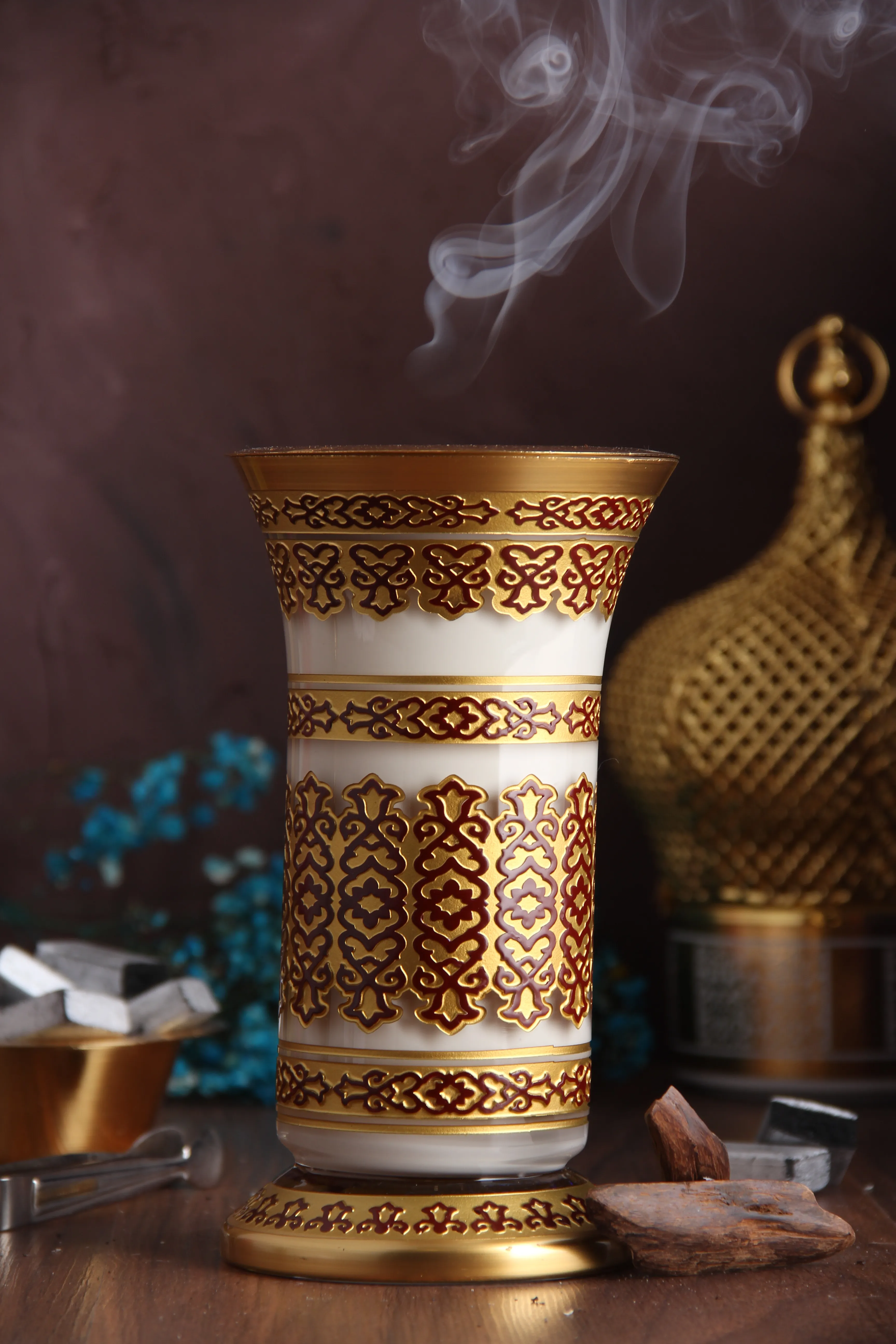
Since 2009 we have painted glass by hand in Istanbul, supplying hotels, companies and luxury brands in more than 30 countries.
- 2009The year Ramla was founded in Istanbul
- 40Painters and artisans in our workshop
- 20,000Pieces painted every month
- 30+Countries our pieces reach
Our story
Our name comes from sand, the material glass is born from. It is what we believe: the simplest materials become works of art in the hands of those who master their craft.
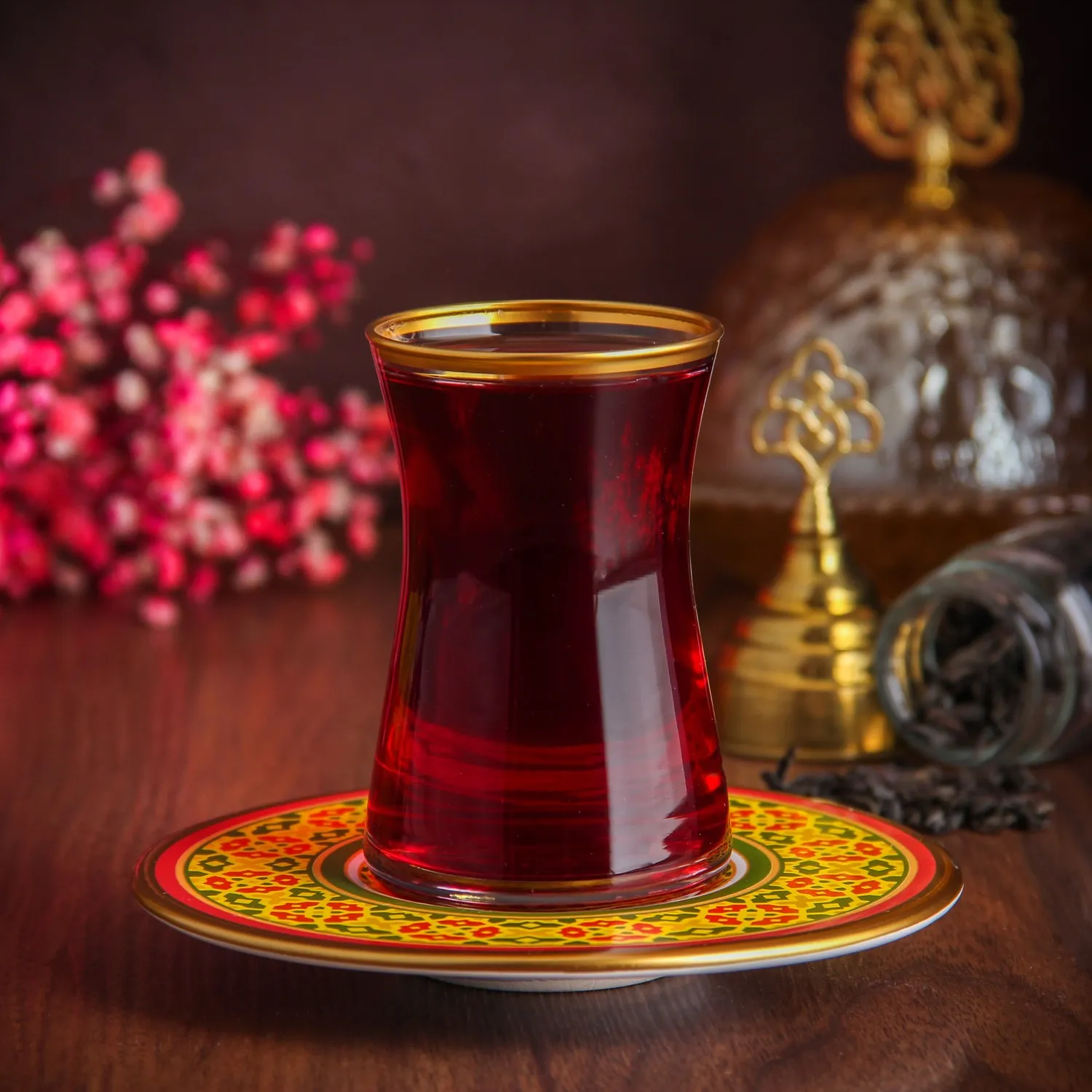
Ramla began in 2009 as a small family workshop in Istanbul, with one painting table and three artisans who had learned to paint glass from their masters. Our pieces were sold in the old bazaars, and visitors carried them home as gifts.
Then requests began to arrive from hotel and café owners who had seen our pieces and wanted them on their tables, and that is when we found the problem. Hand-painted glass was beautiful, but made in quantities too small for a hotel. Wholesale glass was plentiful, but machine-printed, and it had lost its soul.
We built Ramla to bring the two together: a piece painted by an artist’s hand, in commercial quantities and at a consistent quality that businesses can rely on, order after order. We still work the same way, but the single painting table has become a full workshop.
How a piece is made
No piece leaves our workshop before passing through these four stages.
Choosing the glass
We inspect the glass piece by piece and set aside anything with a bubble, a scratch or a difference in shape, because painting reveals flaws rather than hiding them.
Painting by hand
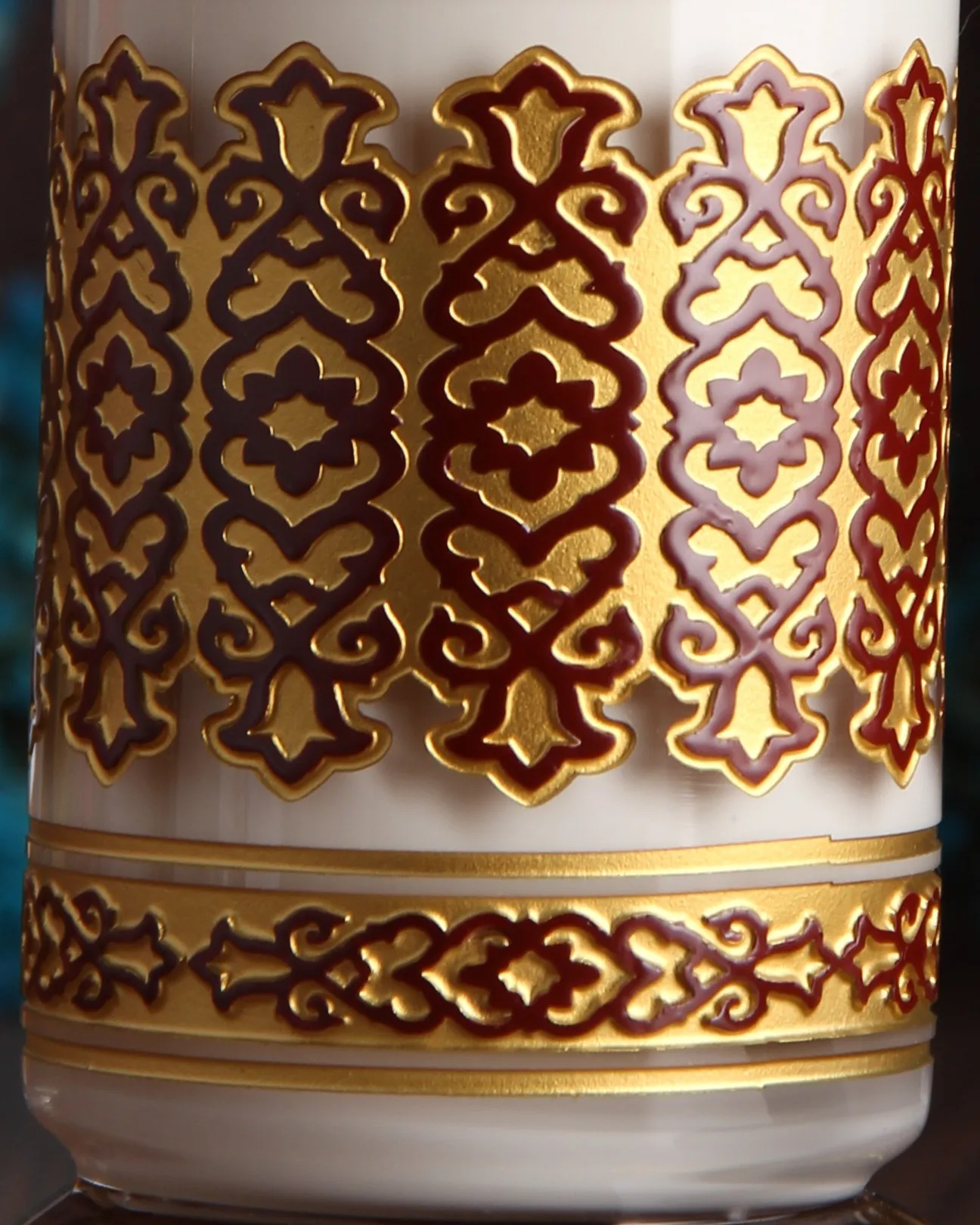
The artist paints the pattern with a brush, line after line. A piece takes from twenty minutes to several hours depending on its detail, which is why each one carries the mark of the hand that painted it.
Gold and firing
Gold lines are added after the colours. The piece then goes into a hot kiln so the painting fuses with the glass, setting its colour and shine.
Inspection and packing
We inspect each piece twice, after the kiln and before packing, then pack it to reach you safely however far it travels.
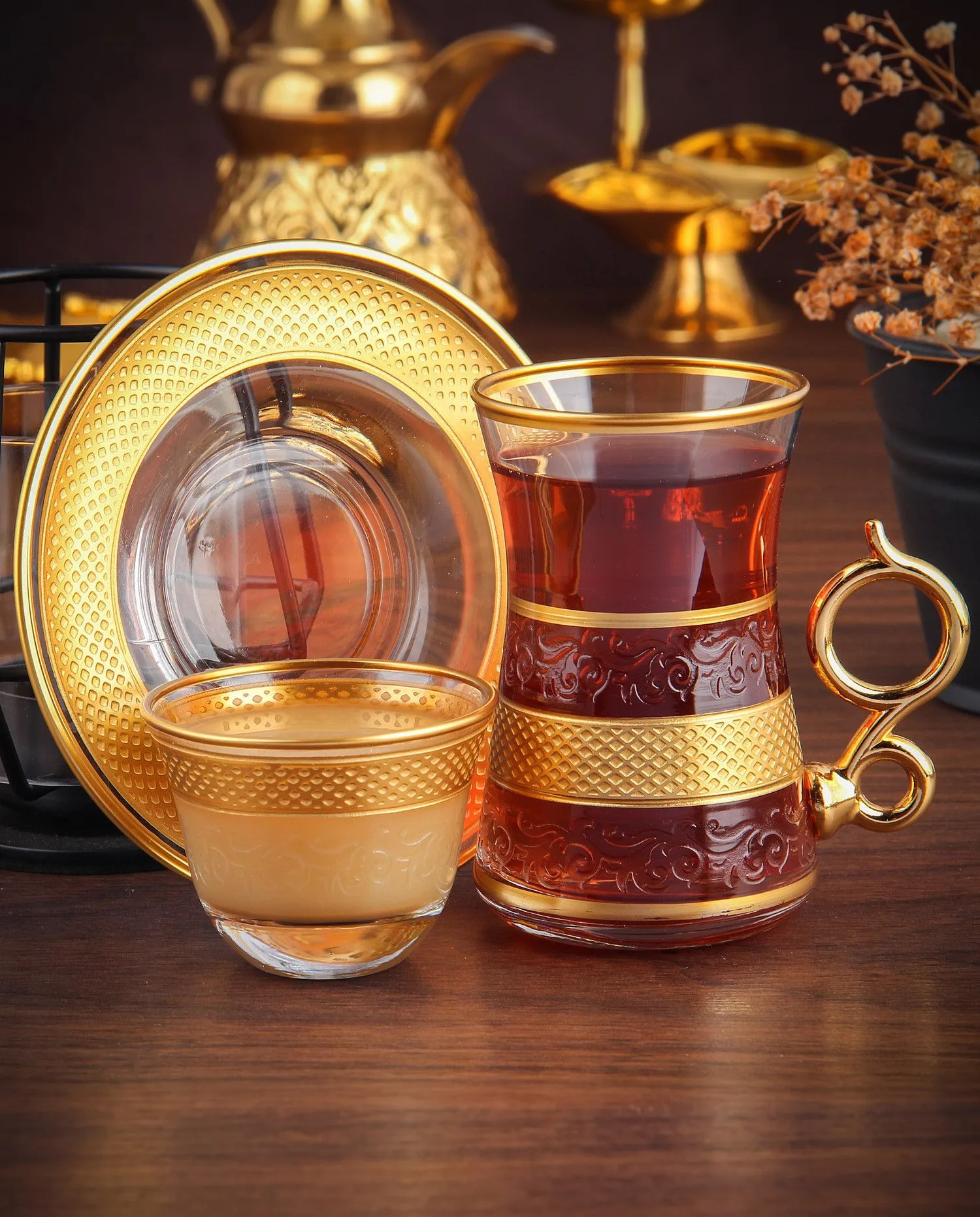
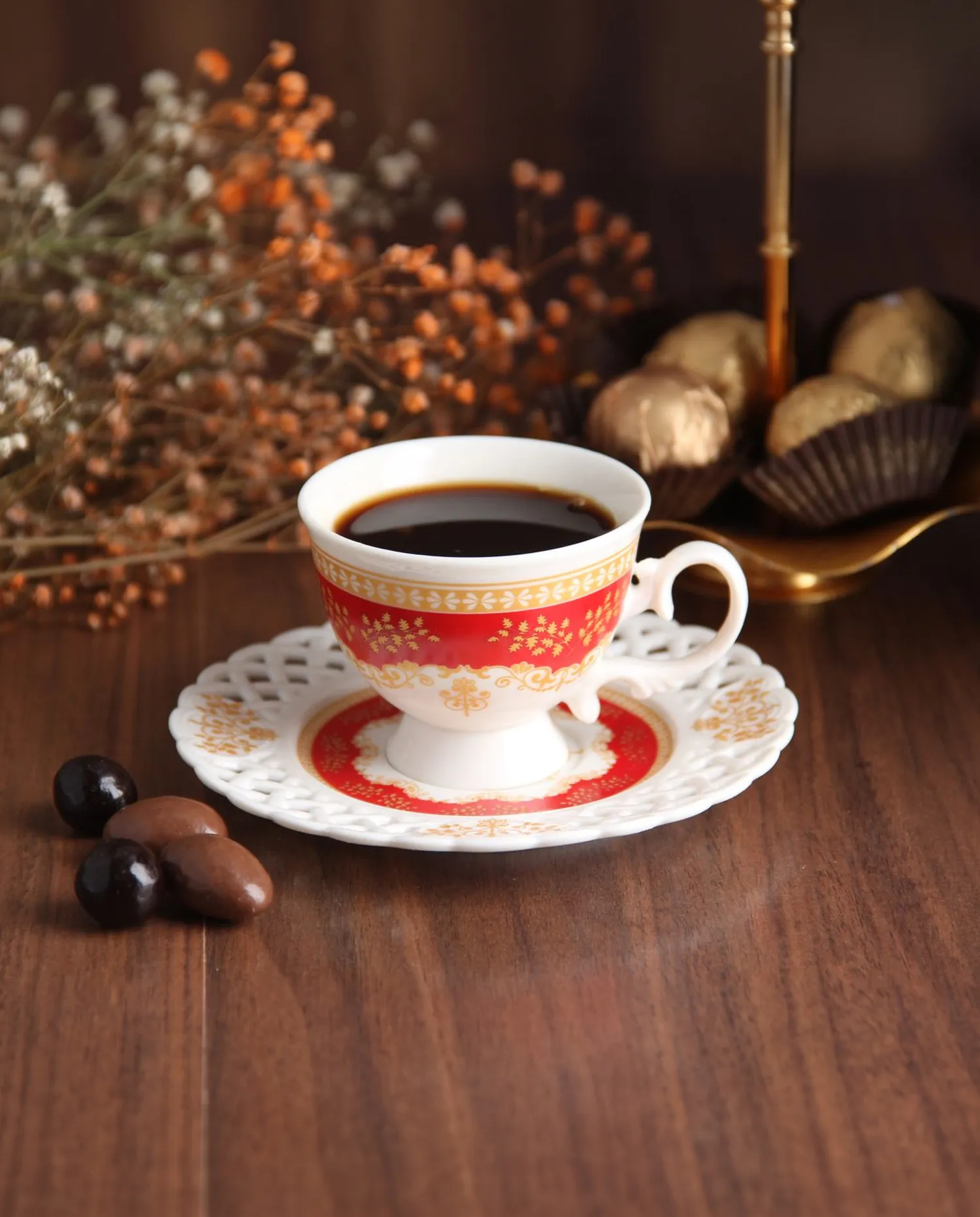
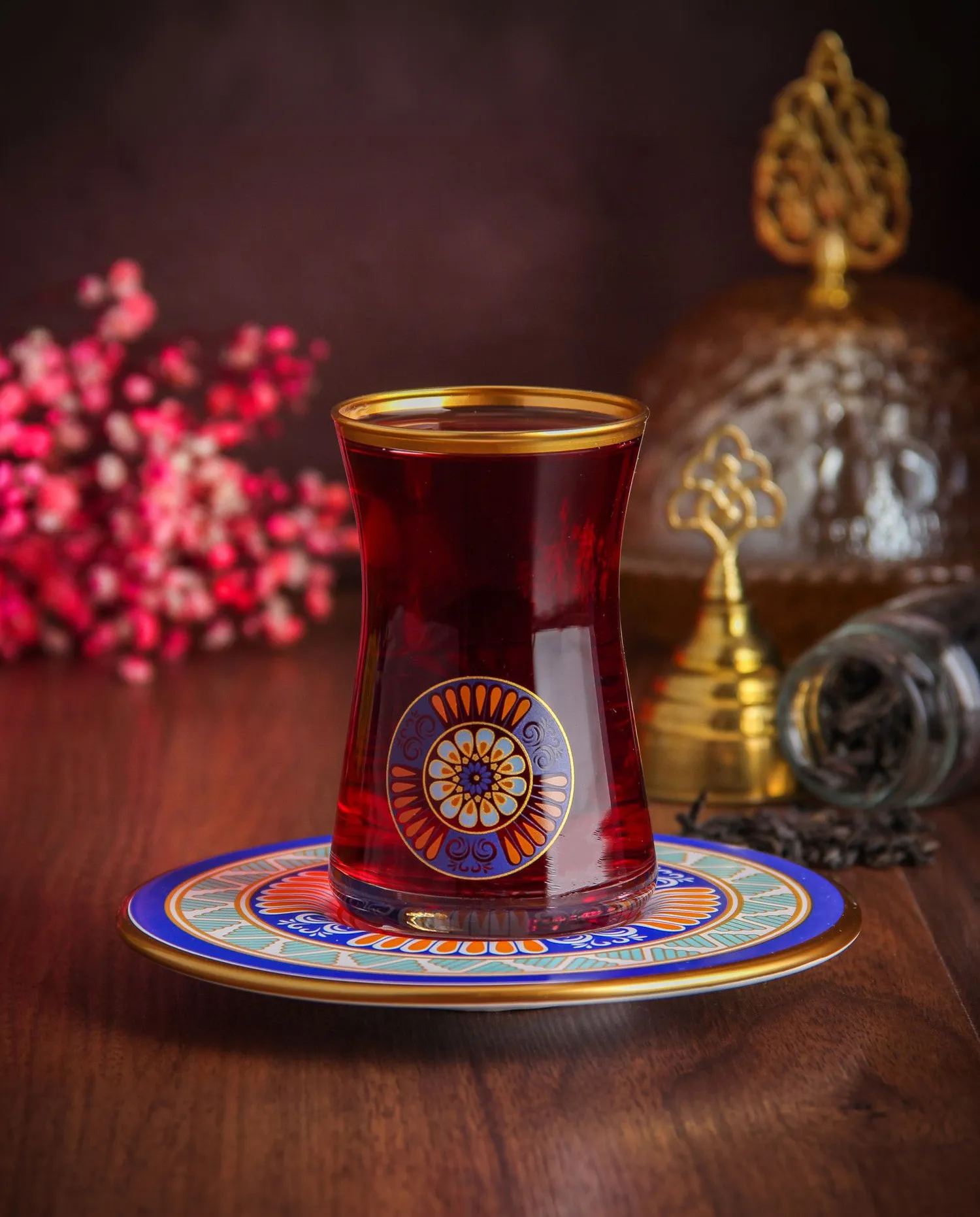
Colours of Anatolia
Every colour on our pieces carries a story centuries older than we are. Choose one to read its story.
Turquoise
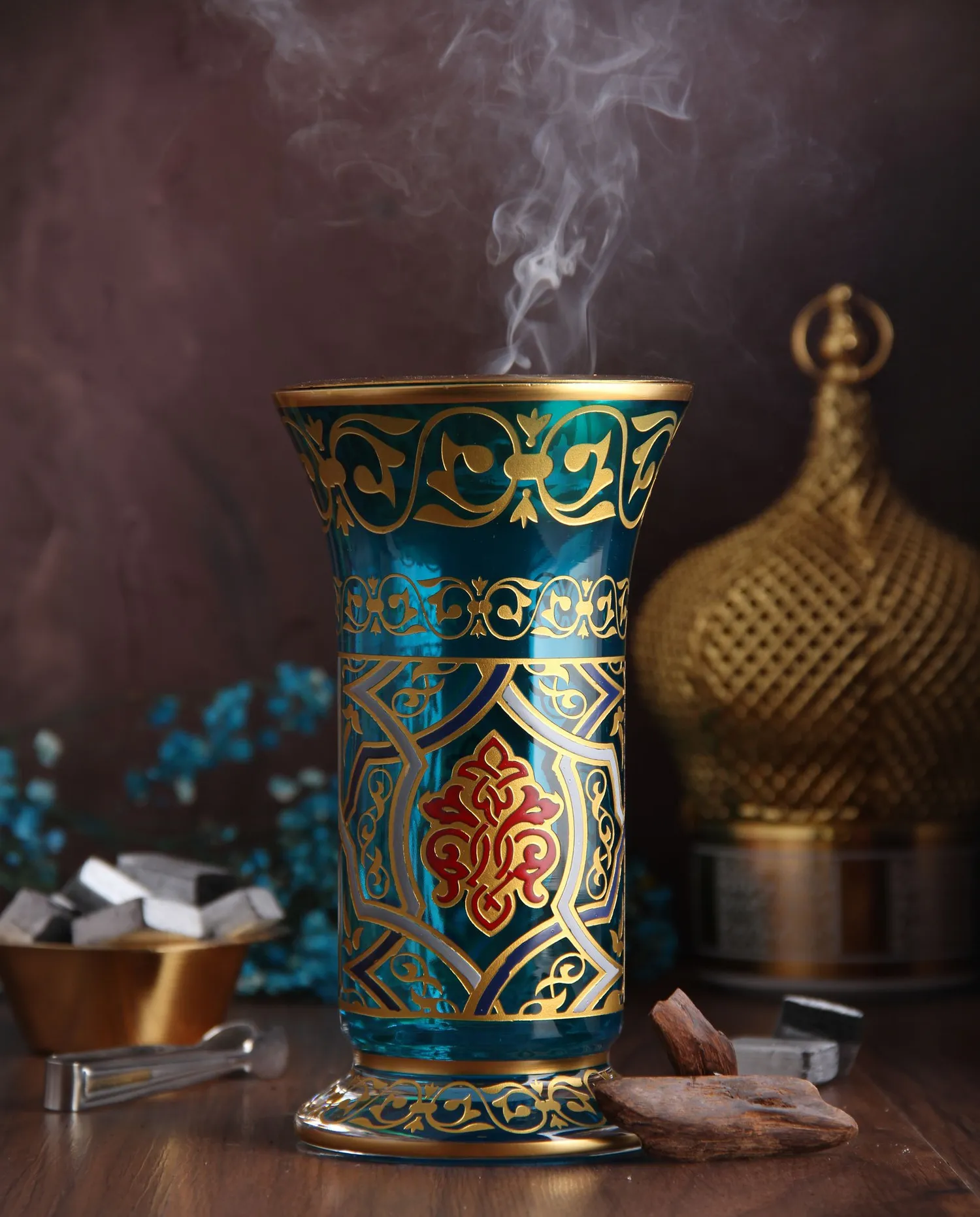
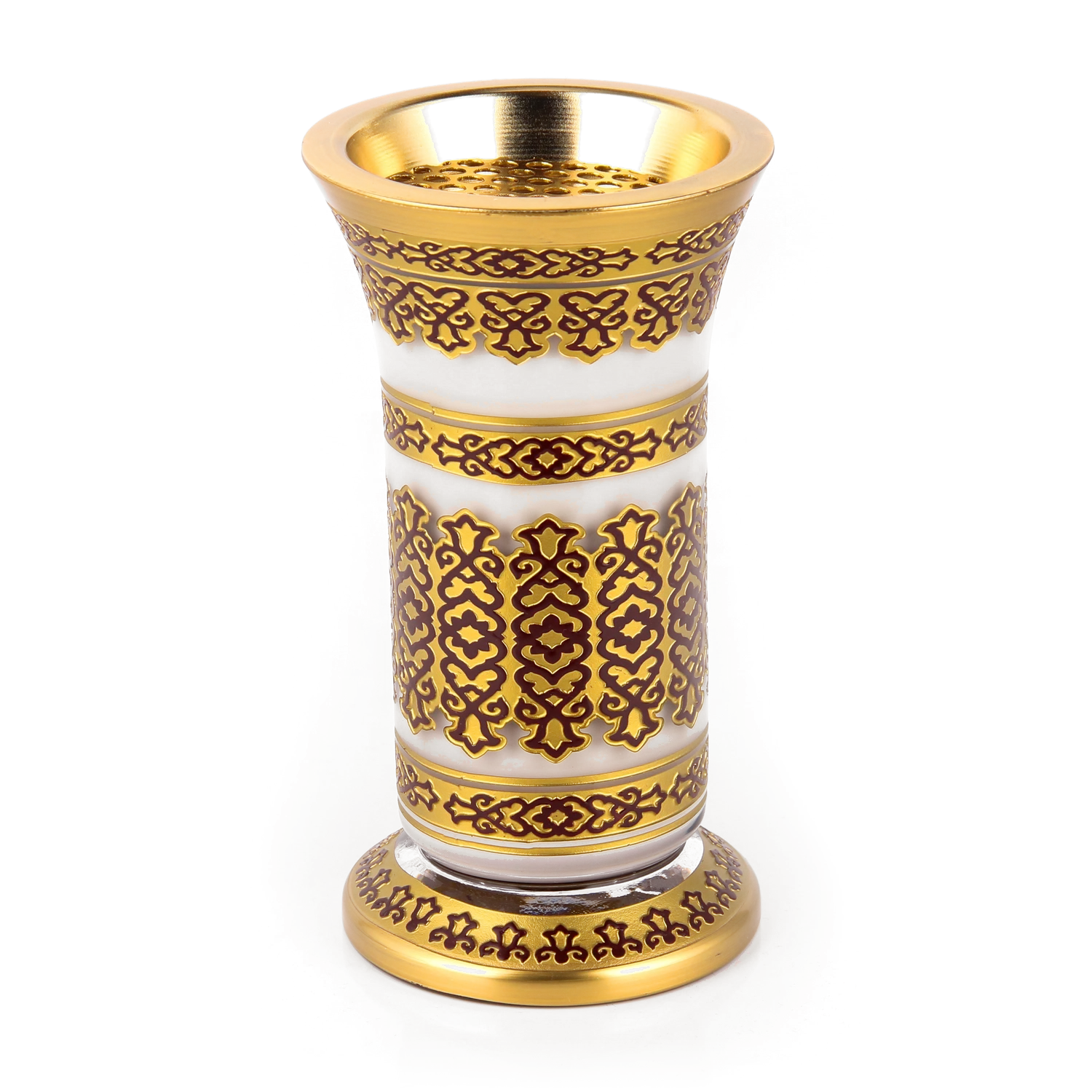
The colour of domes and tiles in Anatolia since the Seljuks, so much so that its French name means “Turkish”. We paint it on incense burners, where it makes the gold stand out.
Gold
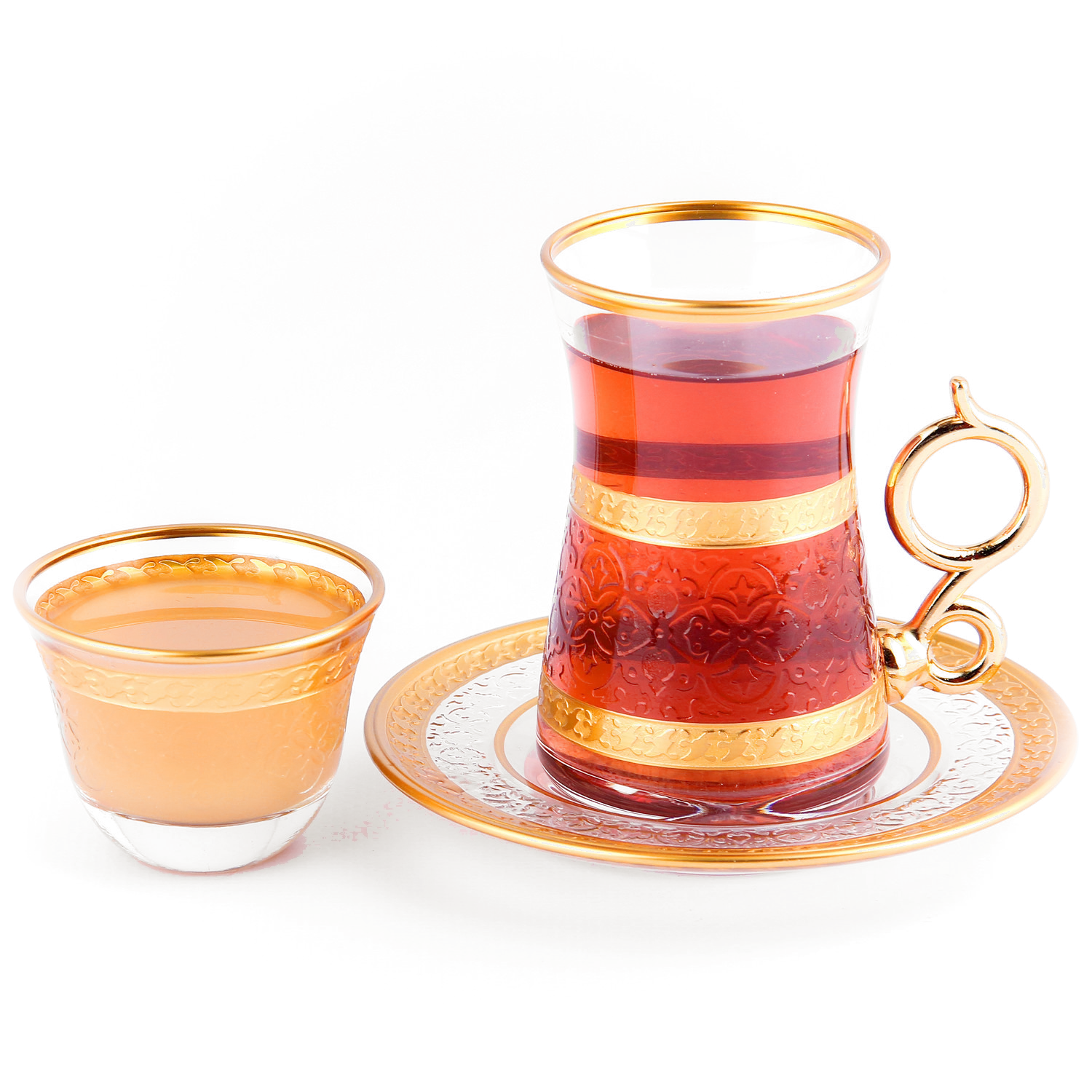
Inspired by tezhip, the Ottoman art of illuminating manuscripts with gold. On tea glasses, its fine lines catch the light with every sip.
İznik red
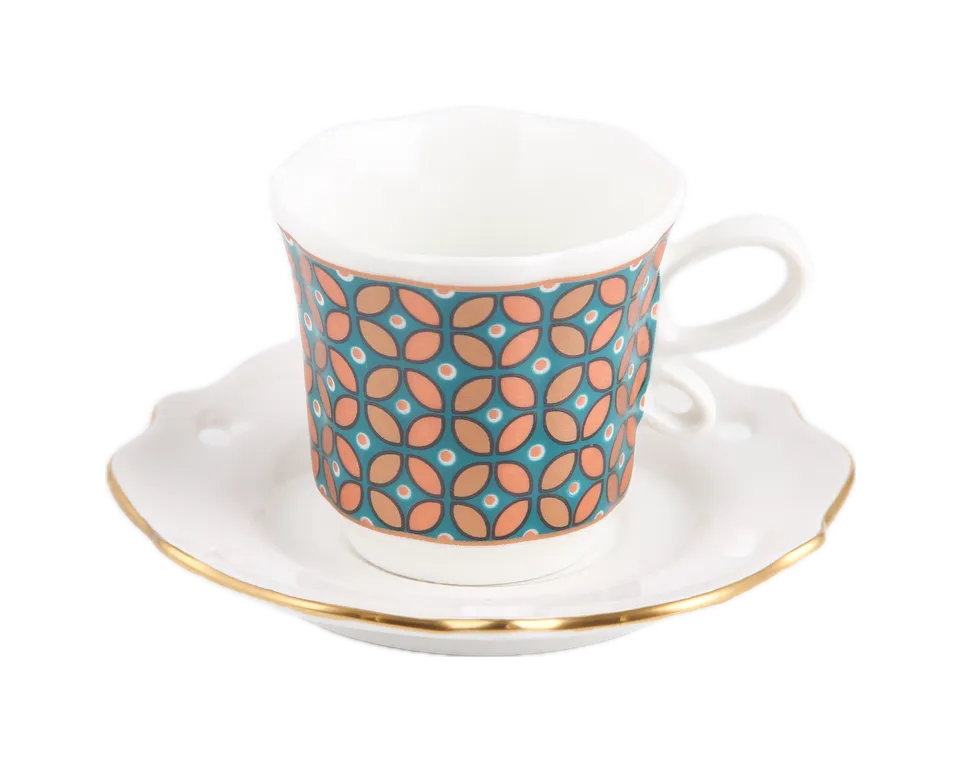
In the sixteenth century, İznik ceramics became famous for a raised red that turned into their signature. We return to it on Turkish coffee cups, where it suits the warmth and colour of the coffee.
Cobalt blue
For centuries this colour adorned İznik ceramics and the tiles of palaces and mosques. We paint it on tea sets with lines of gold, which grow calmer beside it.
What we believe
The hand before the machine
We don’t print our patterns or use decals. Every line you see on a Ramla piece was painted by an artist’s hand.
Quality that repeats
A hotel needs tomorrow’s piece to match today’s, so we keep each model’s specifications and colours to make your next order match your first.
Honesty with our partners
A clear price, a production time we stand by, and a straight answer when a model doesn’t suit the way you’ll use it.
A piece that lasts
We make pieces that stay on the table for years, because what lasts is better for people and the planet than what is replaced every season.
What we make
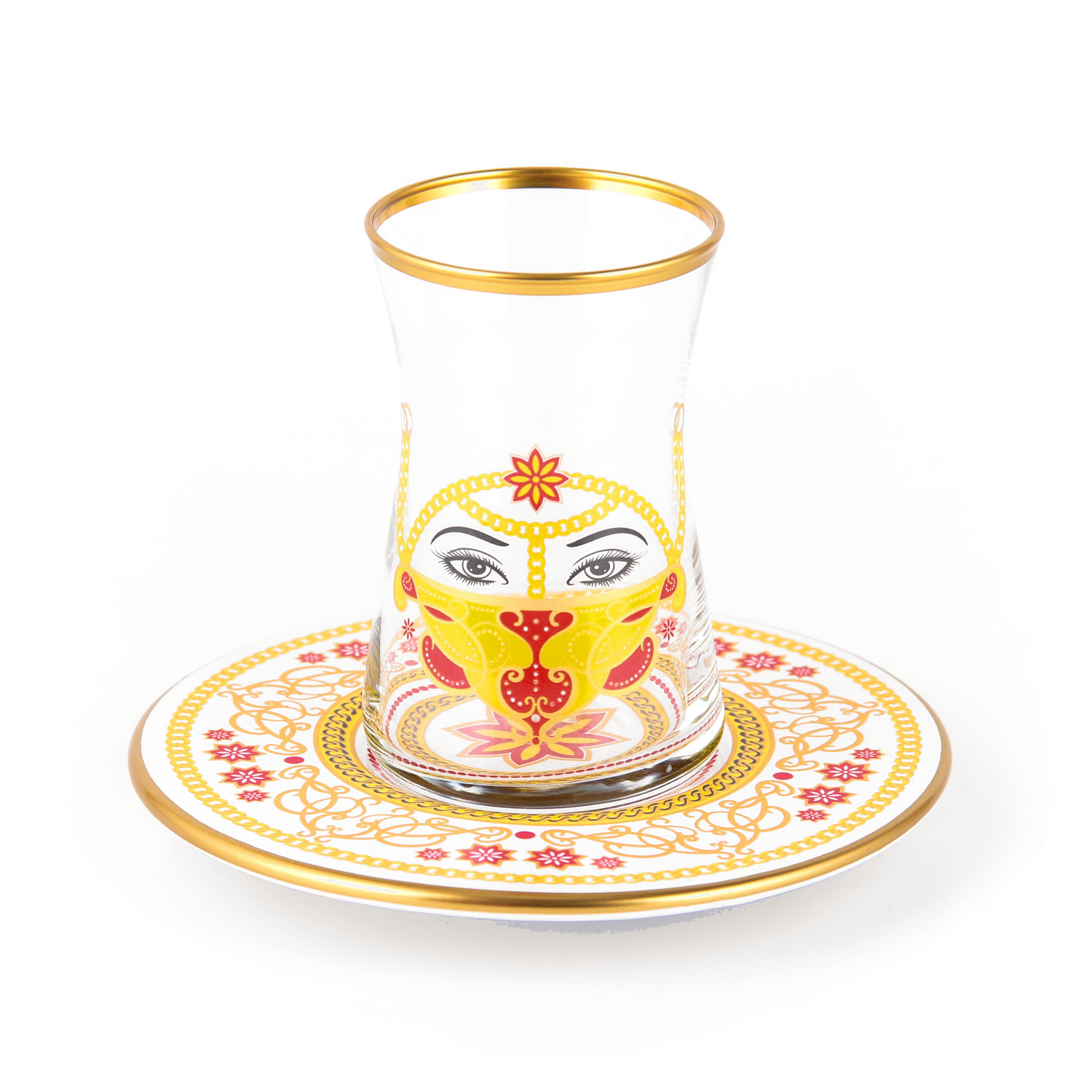
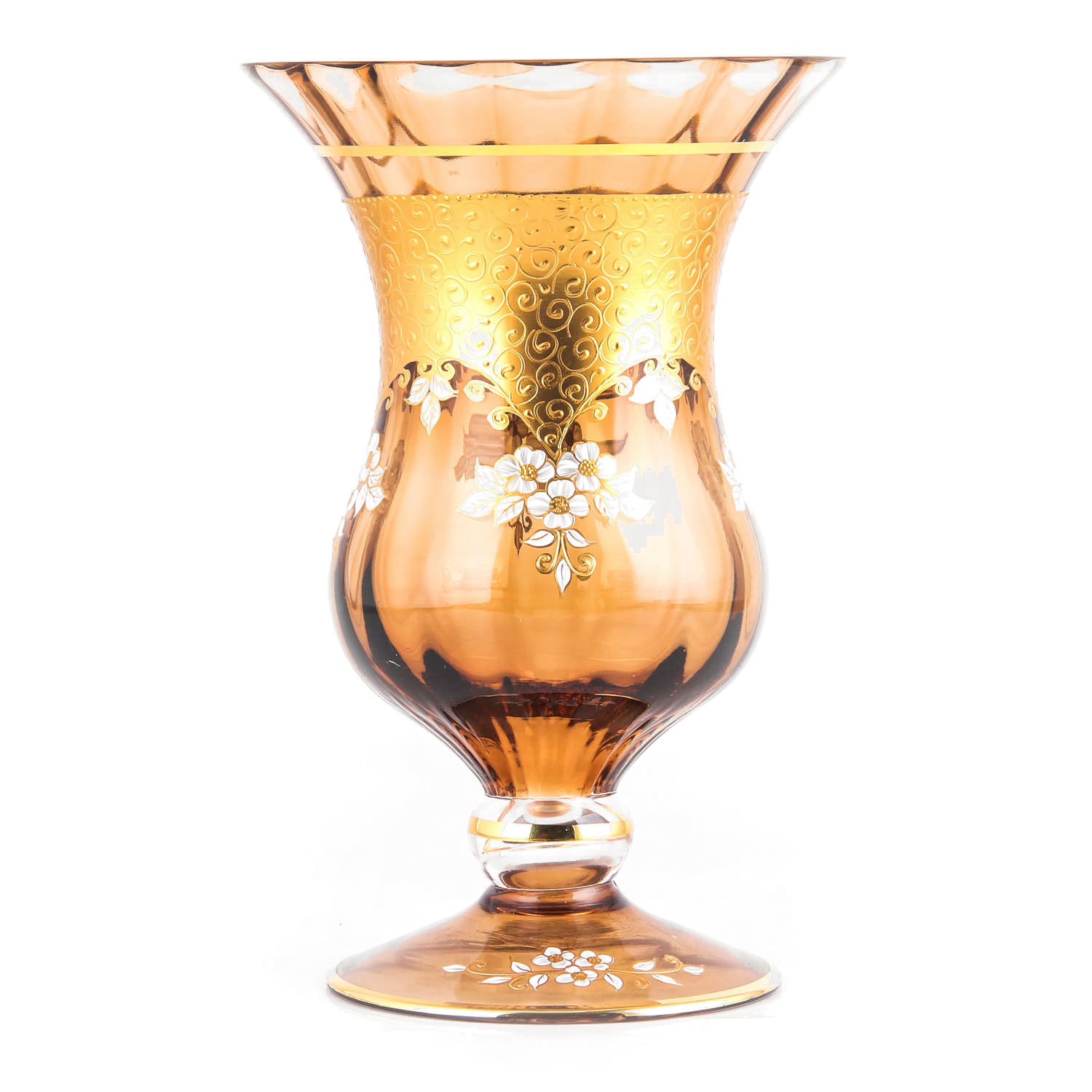
From tea and coffee sets to vases and incense burners, choose what suits your business.
Who we work with
We sell wholesale to businesses and customise pieces to each one’s needs.
Hospitality & luxury retail
Wholesale supply for hotels, restaurants, cafés and gift stores.
Corporate gifts & custom sets
Your logo or name on glass gifts and custom sets, or your own private label.
Perfume & cosmetic glass
Exclusive hand painting on bottles for luxury brands.
Events & weddings
Glass favours and gifts designed for each occasion.